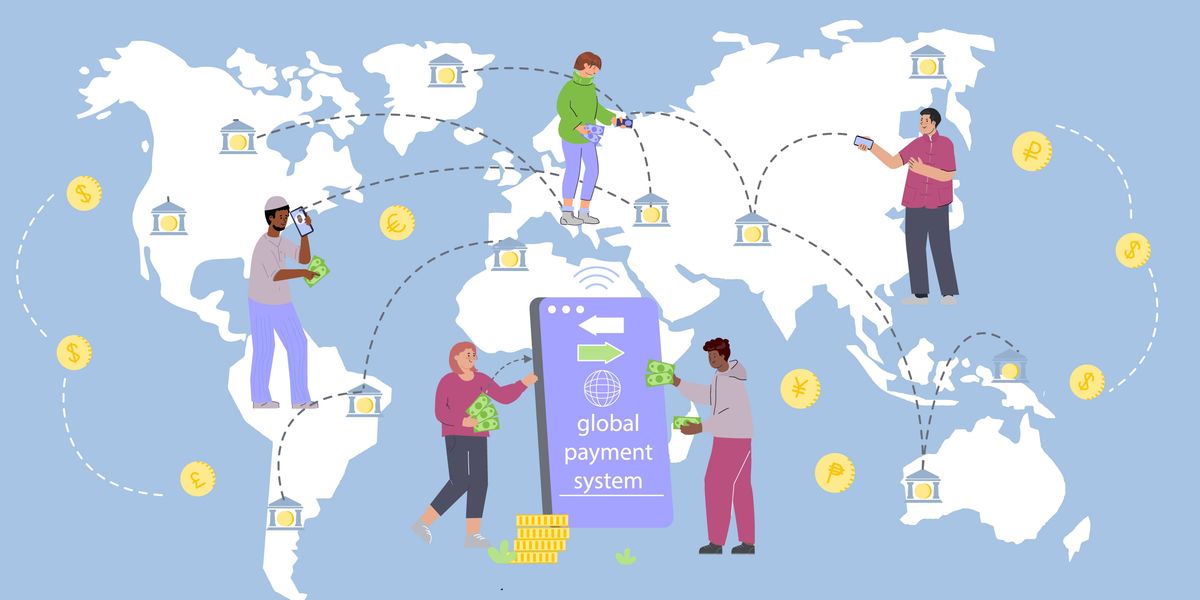
Money moves slowly. That is strange when you really think about it. You can video call someone across the world in seconds. You can send a file to a client in Tokyo before you finish your coffee. But try sending them a payment? Suddenly you are waiting days, paying huge fees, and hoping nothing gets lost along the way and the process does not take too long.
That gap is hard to ignore. And more people are starting to ask why it still exists with all the tech available.
The Payment System Was Built for Another Era
The simple truth is that the way most money moves today was designed decades ago. It works through layers of banks, clearinghouses, and intermediaries. Each one adds time and each one takes a cut.
A wire transfer can take three to five business days. International payments often carry hidden fees. The amount that leaves your account and the amount that arrives are rarely the same. For freelancers, small business owners, and global teams, this creates real problems. You finish the work and then you have to wait because you have no other choice.
The system was built when people worked locally, banked locally, and transacted locally. That world no longer exists for most people.
The Internet Changed Everything Except Payments
Think about what the internet did to communication. Business letters became emails. Phone calls became instant messages. Documents that once required couriers now arrivng in seconds.
But payments never got that same upgrade. We modernized the interface without fixing the underlying infrastructure. Online banking made things look faster. In many cases, the actual movement of money stayed the same.
This mismatch creates friction. Teams collaborate across continents in real time. Payments still crawl through systems built before smartphones even existed. That disconnect is becoming harder to justify as more work, more commerce, and more business moves fully online.
Why Blockchain Fits the Digital Economy Naturally
Blockchain payments do not try to fit into the old system. They work differently from the ground up.
Transactions happen directly between included parties. There is no long chain of intermediaries deciding whether to approve or delay. Settlement can happen in seconds rather than days. Fees are transparent and typically much lower. And because blockchain networks are borderless by design, a payment from one country to another works the same as a payment across the street.
For digital workers, founders, and enterprises operating globally, this is not a small improvement. It removes the structural barriers that slow down real economic activity.
Transactions are also recorded on a public ledger. Both parties can verify what happened at any time. There are no surprises, no "processing" delays, and no wondering where the money is.
New Possibilities for How People Work and Get Paid
When payments can move instantly and globally, new models become practical.
Gig workers can receive payment the moment a task is complete. Micro-transactions become viable for small services, content, or data. Global teams can collaborate without one person waiting three days longer than another to receive the same invoice payment. Clear on-chain records also make accounting and auditing simpler for businesses of any size.
This is not theoretical. Platforms like Coprvy for example are already building digital environments where real work and on-chain payments happen together in one place, creating smoother connections between output and compensation.
Building the Infrastructure That Powers This Shift
The shift toward blockchain payments is not just about individuals adopting new tools. Enterprises and institutions need infrastructure that is reliable, scalable, and secure before they can move with confidence.
That is the work Wave Group focuses on. Wave Group builds blockchain systems and payment infrastructure for enterprises and institutions, handling the technical complexity so organizations can adopt on-chain payments without taking on unnecessary risk. The focus is on building what comes next, not just adapting what already exists.
The Shift Is Already Happening
Blockchain payments are not a trend waiting to be proven. They are a logical response to a real problem. The digital economy needed payments that could keep up. Now they exist.
The organizations that understand this shift early will not have to scramble to catch up later. The infrastructure is being built. The behavior is changing and the standard is moving.
The question is not whether blockchain payments will become normal. The question is whether your organization will be ready when they do.
