Most people hear the word blockchain and immediately think about cryptocurrency. That association makes sense. It is where blockchain got most of its public attention.
But a growing number of organisations are exploring blockchain for a completely different reason. Mainly for practical business problems that have been difficult to solve any other way.
Here are five of them.
Lack of trust between multiple parties
When suppliers, partners, contractors, and clients work together, everyone keeps their own records. Invoices do not match and timelines get disputed. People spend time verifying information that someone else says they already sent. The friction is real and it compounds over time.
How blockchain helps
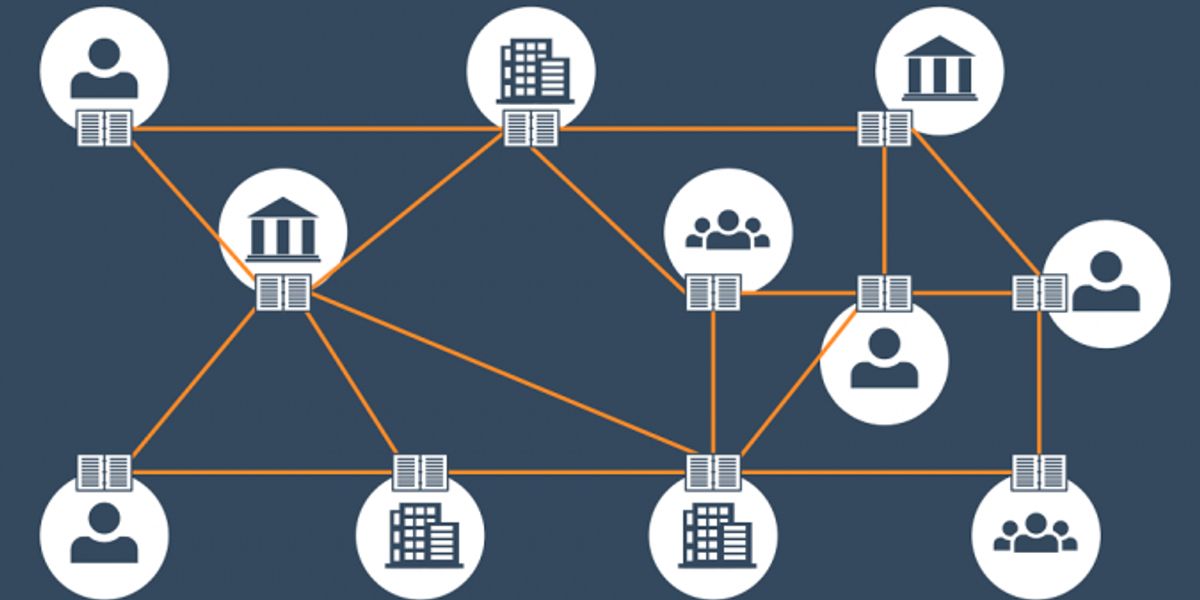
A shared record that all parties can see and trust. One version of the truth, rather than several versions in conflict. Disputes become easier to resolve because the history is clear and cannot be quietly changed after the fact.
Supply chain visibility
Many companies struggle to answer basic questions about their own products. Where is this shipment right now? Who handled it? When did it move? The further back in the supply chain you look, the murkier the picture gets.
How blockchain helps
Every movement gets recorded as it happens. The trail is permanent. Traceability becomes straightforward, and transparency improves across the entire chain, not just within a single company's systems.
Compliance and audits
Audits are expensive. Preparing for them takes significant time. Records are scattered across different systems, different teams, and sometimes different countries. Pulling everything together under pressure is slow work, and gaps in the record create real risk.
How blockchain helps
A continuous and traceable record that builds itself as operations happen. When an audit comes, the documentation is already there. The process gets faster, and the risk of missing information drops significantly.
Document verification
Businesses verify documents constantly. Contracts, certificates, licenses, ownership records, regulatory approvals. Each verification takes time, often requires time and communication, and still leaves some doubt about whether what was received is genuine.
How blockchain helps
Documents recorded on a blockchain are easier to handle and anyone with access can verify authenticity quickly. The question of whether a document has been altered since it was issued has a clear answer.
Slow workflows
Many business processes slow down simply because different organisations need to verify the same information repeatedly. Procurement approvals, supplier onboarding or regulatory sign-offs. Each party checks what the previous party already checked, because there is no shared system they all trust.
How blockchain helps
When verification happens once and the result is recorded in a shared ledger, downstream parties can rely on it without starting over. Coordination improves. Workflows move faster. The same work stops being done three times by three different teams.
Why this matters now
Businesses are becoming more digital, more connected, and more dependent on partners and systems outside their direct control. As that complexity grows, trust becomes harder to maintain and more important to get right.
Blockchain is not a future technology waiting to arrive. It is already solving real business problems today.
Blockchain is not the right solution for every problem. But for organisations dealing with coordination, traceability, compliance overhead, or slow verification processes, it is worth taking seriously as practical infrastructure.
Wave Group helps organisations identify where blockchain creates real business value and implements solutions focused on transparency, trust, and operational efficiency. Real blockchain applications that make organisations run more reliably and with greater confidence across the people and systems they depend on.
The most useful question is whether your organisation has problems that blockchain is uniquely positioned to solve.
The answers are usually closer to your current operations than most people expect.
