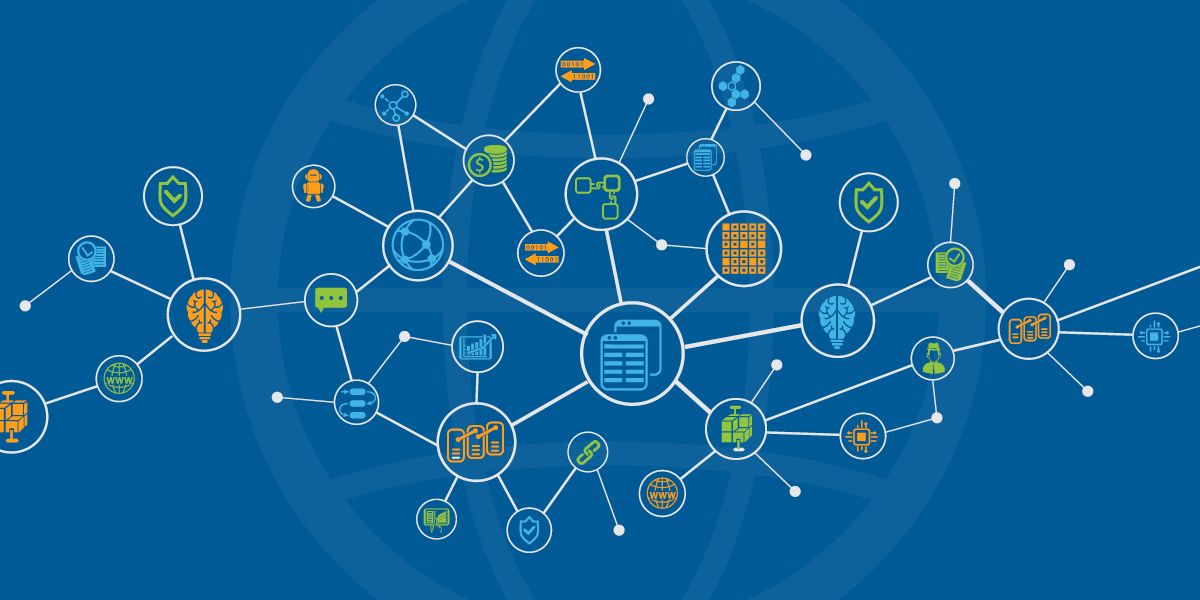
Many businesses approach digital transformation one technology at a time. One year the focus is AI. The next it shifts to automation. Then cloud migration becomes the priority. Then blockchain enters the conversation.
Each investment may create some value on its own. But when technologies are introduced separately, without a clear picture of how they relate to each other, they tend to solve isolated problems rather than improving the business as a whole. The result is a collection of tools that coexist without truly working together.
The strongest digital businesses are not built around individual technologies. They are built around an architecture where every technology has a clear purpose and each one strengthens the others.
Business architecture matters more than individual tools
Successful organisations do not simply collect software. They design systems.
Business architecture is the way technology, processes, information, and people work together to support what the company is trying to achieve. When the architecture is well designed, information moves smoothly between teams and systems. Decisions become faster because the right data is available to the right people at the right moment. Operations become simpler because the components are connected rather than parallel. Technology supports the business rather than creating additional layers of complexity that someone has to manage.
When the architecture is not well designed, each new technology investment adds to the complexity without adding proportional value. The tools exist. The integration does not.
Where blockchain fits inside modern business architecture
Blockchain has a specific and valuable role to play inside a well-designed digital business. It is not the solution to every challenge, and treating it as one leads to implementations that disappoint. But it solves a particular set of problems that other technologies are not designed to address.
When organisations need trusted records that multiple parties can rely on without each maintaining their own version, blockchain provides that shared foundation. When businesses need audit trails that are transparent, and complete, blockchain creates them reliably. When companies collaborate across organisational boundaries and need confidence that shared information is accurate and unchanged, blockchain supports that confidence. When digital ownership, certifications, or agreements need to be verifiable by parties who do not already trust each other, blockchain provides the infrastructure for that verification.
Not every business process benefits from blockchain. But the right processes benefit greatly from it, and identifying which ones requires understanding the architecture first.
Why integration creates far more value than isolated implementation
The real power of modern digital infrastructure comes from how technologies complement each other rather than from what any single technology does on its own.
AI analyzes information and surfaces insights that would take humans far longer to find. Automation moves work through processes without requiring constant human intervention to keep things progressing. Cloud platforms allow systems to scale and connect without the constraints of physical infrastructure. Blockchain strengthens trust and verification where reliable shared records matter. Cybersecurity protects the environment that all of these systems operate within. Compliance ensures that the operations meet the standards that regulators and partners expect.
Together, these technologies create digital businesses that are intelligent, efficient, secure, and trustworthy. The advantage comes from how they work together. Remove one component without replacing its function and the others become less effective. Add one without connecting it to the others and its value stays limited.
Why this matters as expectations continue rising
Customers increasingly expect transparency about how businesses handle their information and fulfill their commitments. Partners want confidence that shared data is accurate and processes are reliable. Regulators are introducing more stringent requirements around digital records, data governance, and accountability.
Meeting those expectations requires more than adding another platform to an existing stack. It requires thoughtful architecture that connects the right technologies in ways that support the business today and remain adaptable as requirements continue evolving.
About Wave Group
Wave Group helps organisations design modern business architectures where AI, automation, blockchain, cybersecurity, compliance, cloud infrastructure, and custom software work together as one connected ecosystem. The focus is always on solving business challenges, improving operations, and creating systems that remain flexible as technology continues to change. Technology is never implemented because it is new or because another competitor adopted it. It is implemented because it has a clear purpose within the overall architecture and a measurable impact on how the business performs.
Digital transformation is no longer about collecting more technology. It is about connecting the right technologies in the right way.
Businesses that build strong digital architectures will adopt future innovations more easily, operate with greater confidence, and continue creating value as the landscape keeps changing.
Blockchain is not the entire architecture. But in the right place, it becomes an essential part of building businesses that are ready for what comes next.
